Hair Accessories: A Simple Buyer's Guide
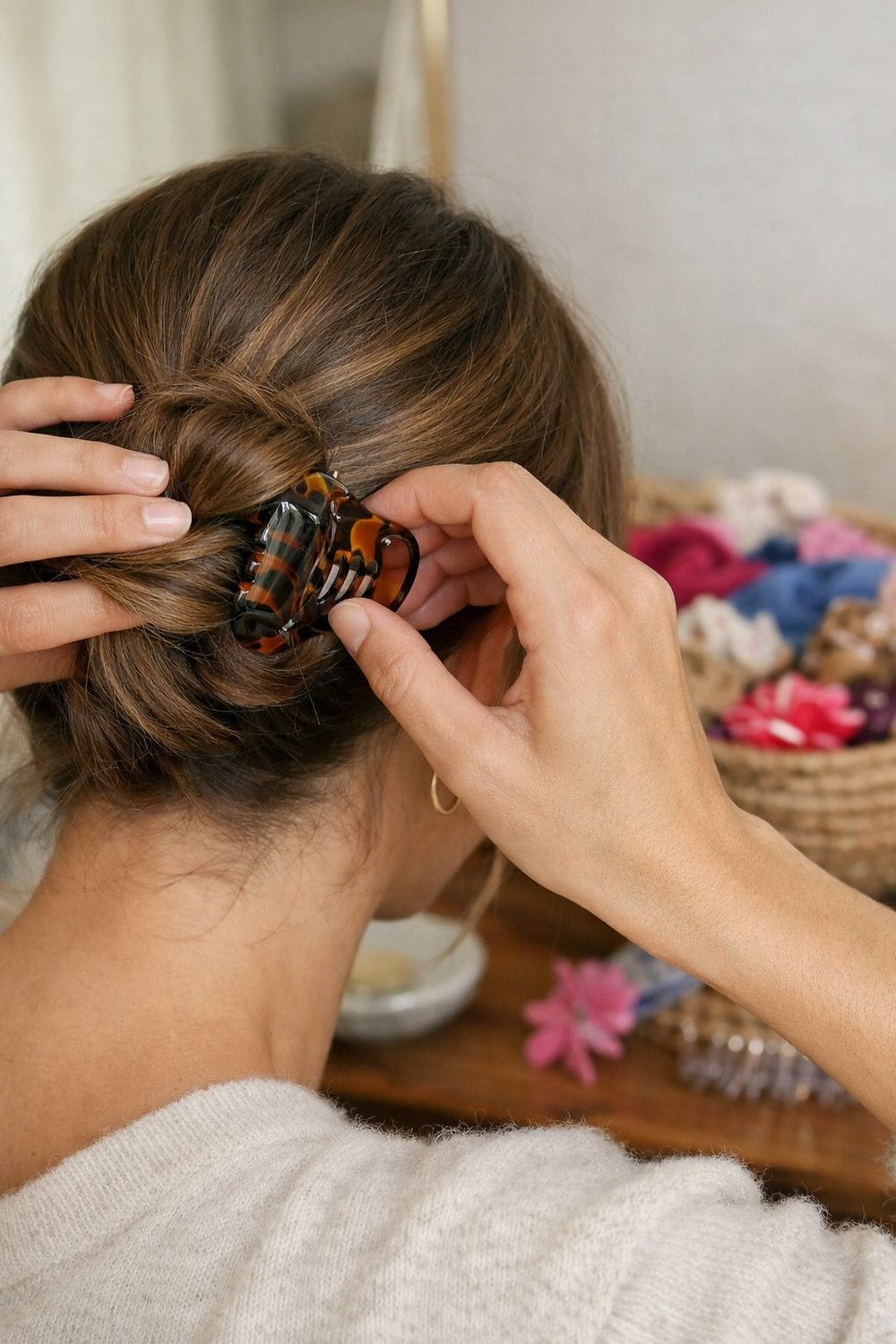
It's easy to end up with a ridiculous number of hair clips. Many people let most of them sit in a drawer unused, because they bought them for the hair they wished they had, not the hair they actually have. If that sounds familiar, this guide is for you.
The short version is simple: pick pieces that suit how you wear your hair on a normal Tuesday. Not on a good hair day. Not in a photo. On a regular, rushed morning when you've got five minutes and one free hand.
Below, I'll walk through what I check before I buy anything now, the stuff I'd skip, and the mistakes that filled my drawer in the first place.
Short on time? Our top picks: Invisibobble, Scunci, Kitsch and Goody. See all picks
Quick summary
- Match the accessory to your hair length and thickness before you look at colour or style.
- Read the product description for size and grip details. Photos can fool you.
- Think about comfort, especially if you wear something for a full workday.
- Sets are good for trying styles. Singles are better when you already know what you like.
- Give your pieces a home so they don't scatter around the house.
- Check the return policy before you buy, not after.
Start with your hair length
This is the part most people skip, and it's the reason so many clips end up unused. A claw clip that looks great on long, thick hair can slide right out of a chin-length bob. A tiny snap clip that's perfect for short hair will disappear into a heavy ponytail.
Short hair
If your hair is above your shoulders, smaller pieces tend to work best. Think small claw clips, snap clips, bobby pins, and thin headbands. These can hold back a side section or pin a fringe without needing much hair to grab onto.
Short cuts like a pixie can last a couple of years, and hair accessories still have a place there. The only things I really used were a soft headband and a few matte bobby pins. Everything else was too big and looked a bit like it was floating on my head.
Medium hair
Shoulder-length hair gives you the most options. Medium claw clips, scrunchies, barrettes, and most headbands will work. You can usually do a half-up style or a low twist without trouble.
The thing to watch here is clip size. A "large" claw clip might handle a full twist on medium hair, or it might be a bit too roomy. Look at the measurements if they're listed.
Long hair
Long hair needs more holding power. Bigger claw clips, sturdy hair ties, and wider barrettes make sense. Small decorative clips can still work, but mostly as an accent, not as the thing holding your hair up.
Thick versus fine
Length is only half of it. Two people with the same length can need totally different accessories. Fine hair often slips out of smooth clips. Thick hair can snap cheap hair ties or pop open a weak claw clip. If you're not sure where you fall, think about how your hair behaves with what you already own. Does stuff slide out? Or does stuff break?
Check the grip before you check the colour
It sounds odd, but it is true. The colour is the fun part. But a gorgeous clip that won't stay put is just jewellery for your drawer.
Read the description properly
Sellers often list useful details if you take a minute to read. Look for things like the clip's size, whether the teeth are long or short, and whether it's meant for thick or fine hair. Some descriptions say what hair types a piece is designed for. Others don't say anything helpful at all, which tells you something too.
If the listing only has a pretty photo and the word "cute," I'm usually cautious.
What helps with grip
- Claw clips: Teeth that overlap or interlock tend to hold better than teeth that just meet at the tips. A firm spring matters too.
- Barrettes: Some have a little texture or a silicone strip on the inside to help them stay.
- Headbands: Small teeth or a soft inner lining can stop them sliding back.
- Hair ties: Thicker, fabric-covered ties often stay in place better than thin ones.
A quick home test
When something new arrives, I put it in, then shake my head a bit and walk around for ten minutes. Sounds silly. Works, though. If it's already slipping by the time I've made coffee, I know it won't last through a day at work.
Material and comfort
Comfort sneaks up on you. A headband feels fine for the first twenty minutes, then by lunchtime you've got a headache behind your ears. That's usually a sign it's too tight or too stiff for your head shape.
Common materials compared
Plastic is light and comes in lots of colours. Quality varies a lot, though. Thin plastic claw clips can crack, especially if you drop them on a tile floor (ask me how I know).
Metal pieces like barrettes and pins can feel sturdy and look polished. Some people find metal snags hair, so smooth edges matter. If you've got sensitive skin or reactions to certain metals, check the seller's page for what the piece is made from, or ask a professional if you're unsure.
Fabric options like velvet, cotton, or satin scrunchies tend to be gentle. Lots of people like satin-style scrunchies, such as those from Kitsch, for sleeping. They're soft and less likely to leave a dent, though that depends on your hair.
Silicone or coil ties (the ones that look like old phone cords) can be easy on hair and leave fewer kinks. Some people love them. They can feel a bit bouncy for a sleek look, but they're great for gym days.
Weight matters more than you'd think
Big decorative clips can look stunning, but if they're heavy, they'll tug all day. If you want a statement piece, I'd save it for shorter wear, like an evening out, rather than an eight-hour shift.
Match pieces to your real routine
Here's where honest thinking helps. What do you actually do with your hair most days?
The rushed-morning person
If you're out the door in fifteen minutes, you want things that work in one move. A claw clip twist, a scrunchie ponytail, a headband. Skip anything that needs a mirror and both hands for five minutes.
The work-from-home person
You probably want comfort first. Soft scrunchies, gentle claw clips, and headbands that don't press too hard. You also might want one or two "camera-ready" pieces for video calls.
The active person
For workouts, look for ties and headbands that stay put when you're sweaty and moving. Wide fabric headbands and strong hair ties are usually more useful here than anything decorative.
The occasion dresser
If you love dressing up for events, it's fine to own a few pretty, impractical pieces. Just know that's what they are. It's fine to keep a couple of pearl clips you wear only a few times a year.
If you're building a whole routine for your hair, not just accessories, the Hair Care Routine and Wash-Day Planner below this post can help you see which styles you do on which days. It makes it easier to spot what you'd really use.
Sets or singles?
This is the comparison I get asked about most. Both have a place.
When sets make sense
A set is handy if you're still figuring out what works. You get a few sizes or styles and can test them without buying each one separately. Sets also make easy gifts.
The catch? You'll probably love two pieces and ignore the rest. That's normal. Just go in expecting it.
When singles make sense
Once you know your favourite clip size or hair tie type, buying singles usually makes more sense. You can pick the exact colour and quality you want, and you're not paying for pieces you'll never touch.
A simple example
Say you've got medium, thick hair and you want claw clips. A mixed-size set might include tiny clips you'll never use and one large clip you love. Next time, it may be smarter to buy two of that large size on its own: one for home, one for your bag.
Compare what's in a set before buying. Count the pieces you'd realistically wear. If it's only one or two, a single might be the better deal for you, even if the set looks like more for your money.
Quick side note: if you're also getting into skincare, you can grab our free AM-PM Routine Chart for Skincare Beginners by joining the email list.
Quality checks worth doing
You don't need to be an expert to spot a piece that won't last. A few quick checks go a long way.
Before you buy online
- Look for real measurements, not just "small" or "large."
- Read reviews that mention hair type. "Loved it" doesn't tell you much. "Held my thick hair all day" does.
- Look at close-up photos for rough edges or seams.
- Check the material listed against what you see in the pictures.
When it arrives
Run your fingers along the edges. Rough bits can snag and break hair. Open and close clips a few times to feel the spring. Stretch a hair tie gently. If anything feels flimsy on day one, it probably won't get better.
Honestly, I'd rather have three good clips than fifteen that pinch, crack, or slide.
Storage that keeps things tidy
Hair accessories have a way of ending up everywhere. Car cupholder. Bathroom sink. Coat pocket. The bottom of a bag next to a loose mint.
Simple storage ideas
You don't need anything fancy. A small tray or dish on your dresser works well for daily pieces. A clear zip pouch is great for travel. Headbands can sit on a spare bottle or a paper towel holder so they don't get bent.
For hair ties, I loop them around a carabiner clip. It hangs on a hook by the door, so I grab one on the way out. Not glamorous. Very useful.
Keep them clean
Accessories pick up hair product and oil over time. Wiping hard pieces down now and then, and washing fabric scrunchies according to the care label, keeps them nicer for longer. If there's no care info, a gentle hand wash is a safe guess for most fabric pieces, but check the seller's page if you can.
Do a drawer clear-out
Every few months, I tip everything out and sort it. Broken pieces go. Things I haven't touched in ages go to a friend or a donation bag. It's oddly satisfying, and it stops me buying duplicates of things I forgot I had.
Read the return policy first
This one is boring, but it's saved me money more than once.
What to look for
Some shops don't accept returns on hair accessories at all, often for hygiene reasons. Others accept them only if the piece is unused and in its packaging. Some ask you to pay return shipping, which can cost more than a cheap clip is worth.
Check the seller's page for how many days you have, whether opened items count, and who pays for shipping back.
Why it matters for accessories
Fit is personal. A clip might be perfect for one person and useless for you. If you're trying a new style or size, a flexible return policy gives you room to test. If the shop is strict, I'd stick to styles I already know work for me.
Common mistakes
These are common buying mistakes, so no judgement here.
- Buying for a style you never wear. If you always wear your hair down, ten claw clips won't change that.
- Trusting the photo over the size. Product photos are often close-ups. That "big" clip might be smaller than your thumb.
- Ignoring hair thickness. Length gets attention, but thickness decides whether things grip or snap.
- Choosing tight over comfortable. A headband that gives you a headache will sit unworn, no matter how pretty it is.
- Grabbing a huge set for the price. More pieces doesn't mean more value if you use only one.
- Skipping the return policy. You find out the shop won't take it back right after it doesn't fit.
- Leaving pieces all over the house. Then buying more because you can't find any. Classic.
The trend-chasing one deserves a special mention. Some accessories get really popular for a season, and it's tempting to buy them all. Try one piece first. If you actually wear it for a few weeks, then think about more.
Gifting hair accessories
Hair accessories make nice small gifts, but they're trickier than they look, because you're guessing someone's hair type and style.
Safer picks
Soft scrunchies, such as those from Scunci, and a simple headband are usually easy wins. They work on lots of hair lengths and don't need perfect sizing. A small mixed set can also be good here, since the person can try a few things.
Riskier picks
Statement clips and very specific sizes are harder to get right. If you're set on one, see if the shop offers gift receipts or easy exchanges.
If you're putting together a bigger beauty gift with skincare in it, the Skincare Set Buyer's Guide and Comparison Sheets below this post can help you compare options side by side without getting overwhelmed.
Hair accessory brands worth a look
These are well-known names that cover the main types of accessory in this guide. Match each one to your hair length, thickness and daily routine before you buy.
Invisibobble
Known for the coil-style hair tie. It suits people who want something that feels gentler than a standard elastic, including gym days. Check how well the size suits your hair thickness, since thick hair may need a larger pack.
Scunci
A long-standing brand for everyday scrunchies, ties and headbands. It suits anyone who wants simple, easy pieces for a rushed morning. Check the material and stretch of each item, since ranges vary a lot.
Kitsch
Offers satin scrunchies, claw clips, headbands and sleep accessories. It suits people who like a soft, coordinated look. Look at the listed clip size to be sure it fits your hair length.
Goody
A familiar name in drugstore hair accessories, from bobby pins to headbands and claw clips. It suits beginners building a basic kit. Check the product details for hold and size, as styles differ.
Riviera
Sells hair ties, clips and accessories, often in multi-packs. It suits people stocking up on practical basics. Count how many pieces you would actually wear before choosing a large pack.
Ficcare
Known for sturdy, designed hair clips and barrettes. It suits people with long or thick hair who want something polished. Check the size guide carefully, and the return policy, because fit is personal.
Etsy
A marketplace where independent sellers make barrettes, pearl clips and statement pieces. It suits occasion dressers who want something distinctive. Read each seller's measurements, material details and return policy, since they differ shop to shop.
Check current plans and prices on each brand's own site.
FAQ
What's the best hair accessory for fine hair?
Pieces with some texture or grip usually do better, like barrettes with a lined inside or claw clips with interlocking teeth. Very smooth, heavy clips tend to slide out. Reading reviews from people who mention fine hair is one of the best ways to check.
Are claw clips okay for short hair?
They can be, as long as you pick a smaller size. A mini claw clip can hold back a side section or a half-up style on chin-length hair. Larger ones usually don't have enough hair to grab onto.
How many hair accessories do I actually need?
There's no right number, but most people end up using just a handful regularly. Start with a few pieces that match your everyday style and add slowly. It's easier to fill a gap than to clear out a drawer full of things you don't use.
Can hair accessories damage my hair?
Some can cause snagging or breakage, especially ones with rough edges or very tight hair ties used every day. Smooth edges and gentler materials tend to help. If you're worried about hair breakage or scalp issues, it's worth talking to a hairdresser or other professional.
Your next step
Before you buy anything new, open your drawer and pull out the three pieces you actually reach for. Those tell you more about what to buy next than any trend ever will. Once you've done that, grab the free AM-PM Routine Chart for Skincare Beginners from the sign-up box, then take a look at the Hair Care Routine and Wash-Day Planner and the other guides below this post if you'd like a bit more structure for your routine.
Printables and tools that can help
Hair Care Routine and Wash-Day Planner
A printable wash-day routine, weekly hair schedule, product log and hair...
See detailsSkincare Set Buyer's Guide and Comparison Sheets
A printable guide and comparison sheets to note what matters to you before you look at any seller...
See details