Hair Care Planner: Keep Track of What You Try
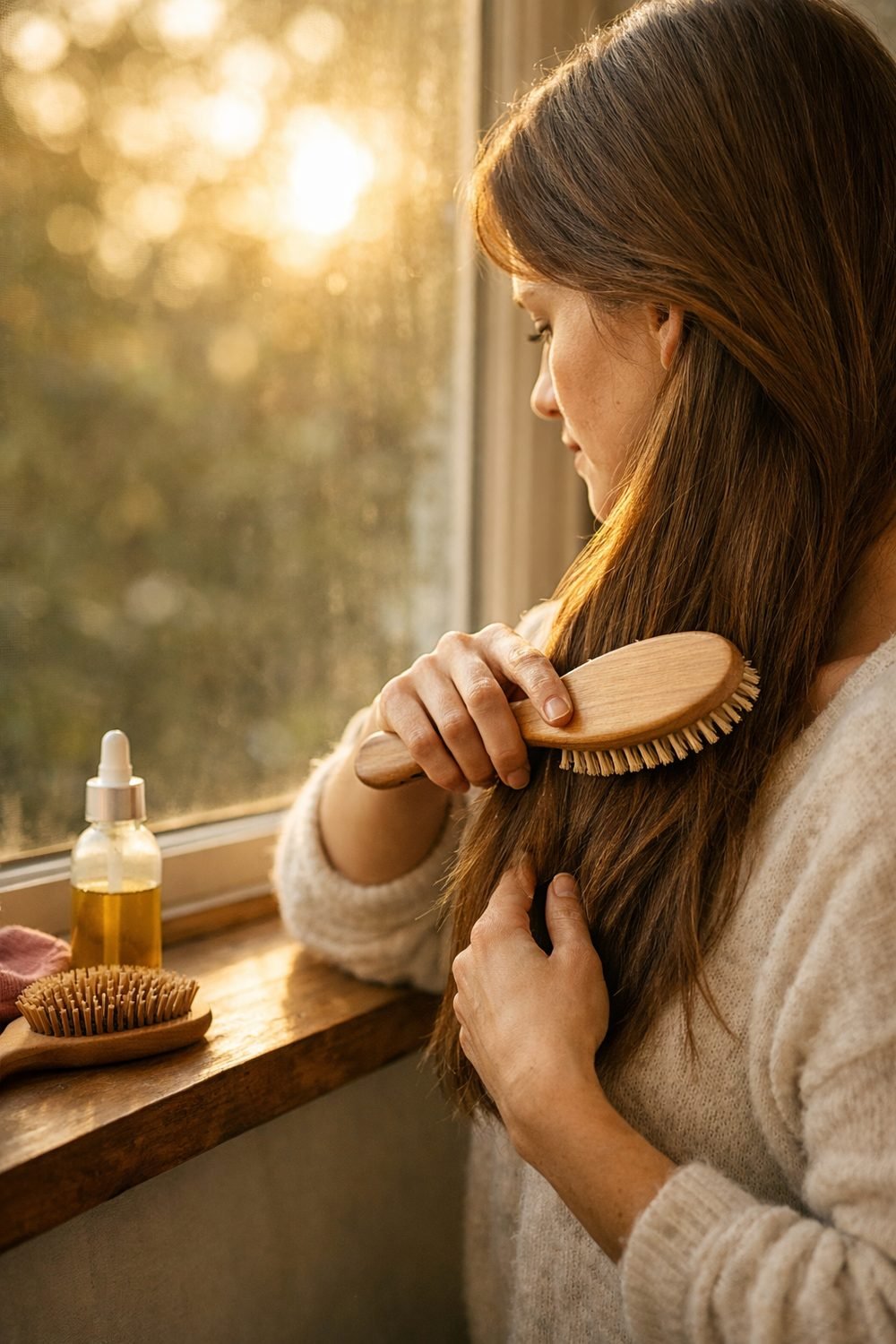
You might think you know your hair. Then one month you buy a new conditioner, switch shampoos, try a hair oil a friend swears by, and start air drying instead of blow drying. By week three my hair felt great. Or terrible. Honestly, I couldn't tell you which change did what, because I'd changed everything at once and written down nothing.
That's a good time to start keeping a simple hair care diary. Nothing fancy. Just a few notes after each wash. It took me about two minutes a session, and within a couple of months I finally had real answers instead of guesses.
If you've ever stood in front of your bathroom shelf wondering why you own six half-used bottles, this post is for you. Here's how I set up a weekly hair care planner, what I write in it, and how I actually use it to decide what stays and what goes.
Short on time? Our top picks: Apple Notes, Notion, Google Sheets and Day One. See all picks
Start With the Date, Every Single Wash Day
This sounds too basic to matter. It isn't.
The date is what turns random notes into a timeline. Once you write it down every wash day, you start seeing things you'd never notice otherwise. Like how many days you really go between washes (I thought it was three, it was usually two). Or how your hair behaves in different seasons.
You can also jot a quick note next to the date if something unusual was going on. A few examples of what diary entries might look like:
- Very humid, rained all day
- Went swimming the day before
- Slept badly, wore a tight ponytail
- Heater on all week, air felt dry
These little notes save you from blaming a product for something the weather did. More than once I almost gave up on a conditioner, then looked back and saw it was a stretch of dry, cold days.
Write Down Every Product and Roughly How Much
Here's where most people get lazy, and I get it. But the product list is the heart of the whole thing.
Write the full name of each product you used, in the order you used it. Shampoo, conditioner, mask, leave-in, oil, styling cream, heat protectant, whatever touched your hair that day.
Then add a rough amount. You don't need a measuring spoon. Use terms like "coin size," "two pumps," or "a few drops on the ends." It sounds fussy, but amounts matter a lot. A product that makes your hair greasy at three pumps might be lovely at one. You might be ready to throw out a leave-in cream, only for your notes to show you've been using way too much of it.
If you used a tool, note that too. Diffuser, flat iron, round brush, microfiber towel, plain cotton towel. And the heat setting if you know it.
One tip I wish I'd known earlier: try to change only one thing at a time. If you add a new mask, keep the rest of your routine the same for a few washes. Otherwise you're right back at the start, confused and surrounded by bottles.
Describe the Result Like You're Telling a Friend
After your hair is dry, or the next morning, write a few lines about how it looks and feels. Use your own words. Nobody's grading this.
Some of my real entries look like this: "Soft but flat at the roots." "Ends feel crunchy, frizzy by lunch." "Best curls in weeks, lasted two days." "Scalp itchy by evening."
Try to cover a few different things, not just "good" or "bad." I usually think about:
- How it felt right after drying
- How it looked the next day
- Frizz, shine, volume, tangles
- How my scalp felt
- How long the style held up
Day-two notes are honestly the most useful. Lots of products feel amazing for an hour. Fewer still look good the next morning.
One thing I'll say plainly: if your scalp is red, sore, flaking a lot, or you're losing more hair than usual, a diary is a nice record to bring along, but it's not a fix. That's a time to stop the product and check with a doctor or dermatologist. Also check the product's label and the seller's page for any warnings.
Give Each Wash Day a Simple Rating
Words are great, but a number is faster to scan later. Give each wash day a score from one to five.
Here's a rough way to use a planner:
- Bad. Didn't want to leave the house.
- Meh. Wearing it up.
- Fine. Nothing special.
- Good. Happy with it.
- Great. Want to repeat this exactly.
Don't overthink the scale. The point is to be consistent with yourself. Your three doesn't have to match anyone else's three.
Some people like to rate each product separately too. Some people find that a bit much. Rating the whole wash day, then reading the notes, works better for me. If you enjoy detail, go for it. If you'll quit after a week because it feels like homework, keep it simple.
By the way, if you like the idea of tracking a routine but your skin needs it more than your hair right now, my free AM-PM Routine Chart for Skincare Beginners is a gentle place to start, and you can grab it by joining the email list.

Hair Care Planner Printable, Phone or Paper: Pick What You'll Actually Use
The best format is the one you'll open after a shower when your hands are still damp and you're running late.
A notes app such as Apple Notes is fast and always with you. The downside is that it gets messy and hard to scan. A plain notebook is nice and calm, but you need to set up columns yourself every time.
A printable hair care planner template with set boxes is what finally stuck for me. Having a spot already waiting for "products," "amount," and "rating" means I don't have to think. If that sounds like you, the Hair Care Routine and Wash-Day Planner below this post is laid out exactly for this kind of tracking. And if you'd like hair and skin in one place, the Beauty and Skincare Journal, also below, gives you room for both.
Whatever you pick, keep it near your bathroom or wherever you style your hair. Out of sight really does mean out of mind.
Look Back Once a Month at Your Hair Care Routine
This is the part that makes the whole habit worth it. Once a month, I sit down with a cup of tea and flip through the last few weeks.
Start with your fours and fives. What do those days have in common? Same conditioner? Less oil? Air drying? Then look at your ones and twos, because a hair care routine printable makes them easy to spot. Is the same product showing up again and again?
Your first monthly review may be a little embarrassing. Almost every bad day had one thing in common: a heavy hair mask I loved the smell of. Every good day skipped it. You may find you've been using a product because it feels luxurious, not because it helps.
You might also spot patterns that have nothing to do with products. Maybe your hair is happier when you wash at night. Maybe a tight bun always leaves you with more breakage. These are the kind of things you just can't see without notes.
Don't make big decisions from one or two washes, though. Give a product at least a few tries before you judge it, unless it clearly irritates you. Then you stop right away.
Keep the Winners, Let Go of the Rest
After a couple of months, you'll probably have a short list of products that keep showing up on your good days. That's your real routine. Not the one from an ad, not the one your favorite influencer uses. Yours.
Be honest with the losers. If something has scored a two four times in a row, it's okay to stop using it. Give it to a friend with different hair, or finish it up on your ends only. There's no need to feel guilty about this. Keeping a product that doesn't work just because I paid for it only makes my hair worse.
Also, a small opinion: I think "more steps" is overrated. Many of my best days came from a shorter routine. A diary shows you that clearly, and your shelf may end up a lot emptier.
Before you buy anything new, flip back through your notes. If you already know heavy oils weigh your hair down, you can skip that trendy oil without a second thought. That alone has saved me from a lot of impulse buys.
Tools and Apps Worth Considering for Your Hair Diary
You don't need anything special to track your hair, but a few tools can make the habit easier to keep. Here are some real options for different tracking styles.
Apple Notes
A good fit if you want something already on your phone and quick to open after a shower. Check that you set up a simple template for each wash day, or entries can get messy and hard to scan.
Notion
Suits people who like tables and databases, since you can sort entries by product or rating. Check whether the setup feels like too much work, because a tool you avoid opening won't help.
Google Sheets
Works well if you want columns for date, products, amount and score, and the option to filter later. Check that you are comfortable typing on a phone, since that is where most people will log after a wash.
Day One
A journaling app that suits those who prefer writing short, free-form notes about how their hair looked and felt. Check how it handles photos and exports before you commit, in case you want to keep your records elsewhere.
Moleskine Notebooks
A good pick if you like paper and a calm, screen-free routine. Check the page layout, since a plain or dotted page gives you room to draw your own columns.
Pilot FriXion Pens
Handy if you like to correct entries or rework your notes in a paper planner. Check that the ink suits your paper, and keep in mind that erasable ink can fade in some conditions, so use another pen for notes you want to keep long term.
Google Photos
Useful for snapping a quick day-two photo to pair with your written notes. Check your privacy settings and album sharing options before you add anything personal.
Check current plans and prices on each brand's own site before you choose.
FAQ
How long should I keep a hair diary before I see patterns?
For me, about a month was enough to notice the first clear patterns. Two or three months gave me real confidence about what to keep. It depends on how often you wash, so be patient if you only wash once a week.
Do I need to write something every day?
No. Wash days are the main ones. If something stands out on an in-between day, like sudden frizz or an itchy scalp, add a quick line, but don't feel you have to.
What if I forget to write it down?
It happens to everyone. Just fill in what you remember next time, or skip that day. A diary with a few gaps is still far more useful than no diary at all.
Can a hair diary help with scalp problems?
It can help you notice which products or habits line up with irritation, which is handy information. But it can't tell you why it's happening. For ongoing scalp issues or hair loss, bring your notes to a doctor or dermatologist.
Quick Recap
A hair care planner doesn't have to be complicated, and a PDF or a notebook both work. Write the date, list your products and amounts, describe the result in plain words, and give it a score, whether you download a template or draw your own. Then look back each month and keep what earns its place on your shelf.
If you'd like an easy first step, grab the free AM-PM Routine Chart for Skincare Beginners by joining the email list. Then take a look at the Hair Care Routine and Wash-Day Planner and the Beauty and Skincare Journal below this post, and pick whichever fits the way you like to track. Your next wash day is a good day to start.
Printables and tools that can help
Hair Care Routine and Wash-Day Planner
A printable wash-day routine, weekly hair schedule, product log and hair...
See detailsBeauty and Skincare Journal
A 100-page journal for notes about products, routines and ideas in your own...
See details