Wash-Day Routine: A Simple Hair Care Plan
Published 2026-10-15

For years my wash day was a mess. It's easy to grab whatever bottle is closest, scrub everything, rub your hair with a towel like you're drying a dog, and then wonder why it looks different every single week. Nothing was wrong with my hair. Often the real problem is simply having no plan.
A wash-day routine takes the guesswork out of hair care. It's not about buying more stuff. It's about doing the same few steps in the same order, so you can actually tell what's working. Everyone's hair is different, so treat this as a framework. Keep what fits and change what doesn't.
Short on time? Our top picks: Wet Brush Original Detangler, Tangle Teezer, Denman Brush and Microfiber Hair Towel from Aquis. See all picks
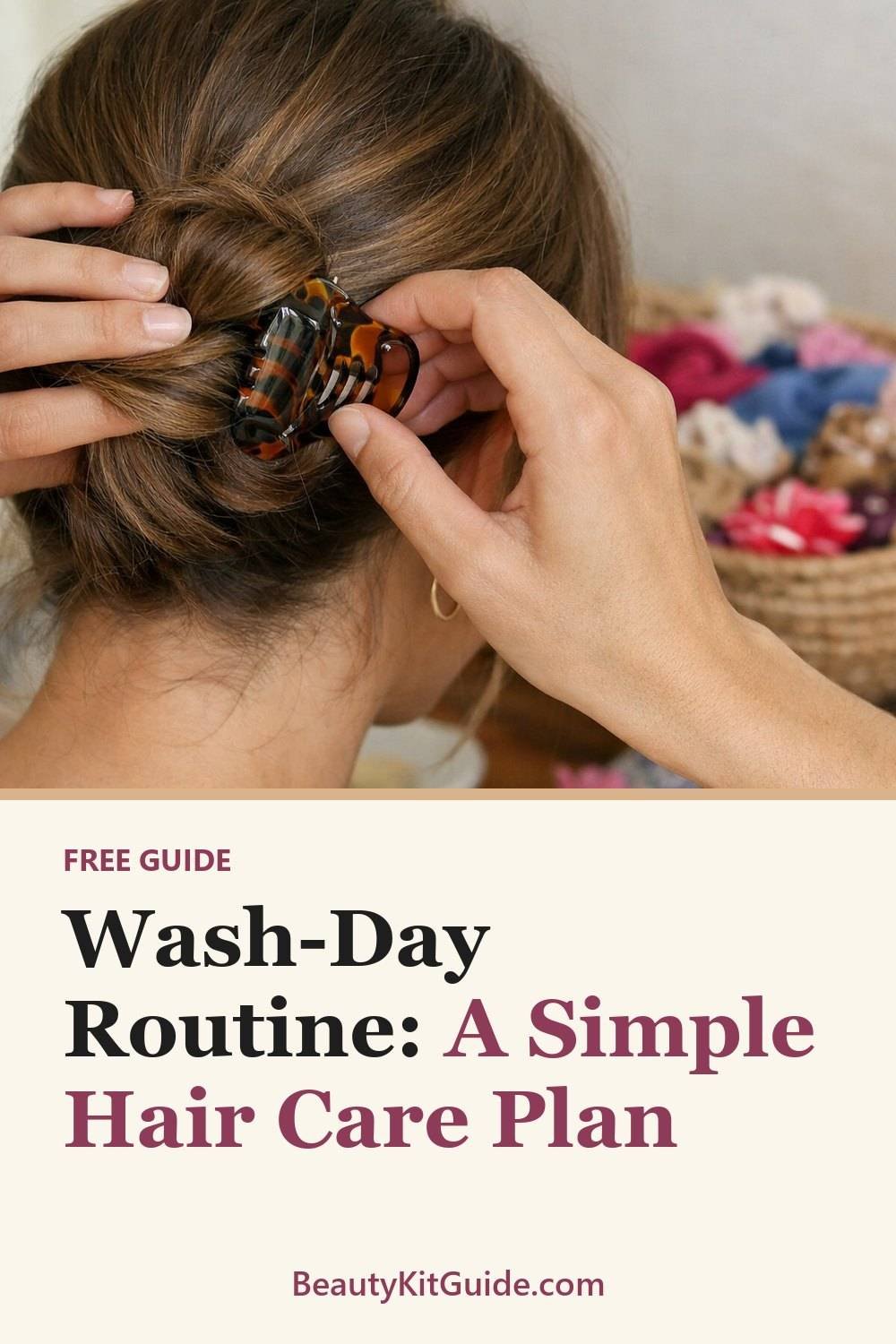
Decide how often you wash
There's no single right answer here, and anyone who tells you there is probably hasn't met many heads of hair. Some people wash every day. Others wash once a week, or even less. Both can be fine.
A few things usually shape the choice:
- How quickly your scalp feels oily or itchy
- Whether you work out and sweat a lot
- How long your hair takes to dry and style
- What your mornings actually look like, not what you wish they looked like
That last one matters more than people admit. Many people plan wash days for busy weekday mornings and end up skipping them half the time. Moving my main wash to Sunday evenings fixed that. Pick a rhythm you can stick to for a few weeks, then adjust.
If you're not sure where to start, try washing a little less often than you do now and see how your scalp feels. If it's uncomfortable, go back. You're the one living with it.
A simple wash-day order
This is the part that made the biggest difference for me. Same steps, same order, every time:
- Detangle before you get in the shower, gently. Start at the ends and work up, using a brush like the Tangle Teezer if you like. Wet hair can be easier to snag, so I find it calmer to get the worst knots out while it's dry.
- Rinse your hair thoroughly with warm water. Give it a full minute or so. It sounds boring, but it helps shampoo spread more easily.
- Shampoo the scalp, not the lengths. Use your fingertips, not your nails. When you rinse, the suds will run down the lengths anyway.
- Condition the lengths and ends, following the product instructions. Some say leave it on for a minute, some say longer. Read the bottle, because they really do differ.
- Rinse with cooler water if you like. Some people love this. I do it in summer and skip it in winter, because I'm not a hero.
- Dry gently, patting or squeezing with a soft towel instead of rubbing. An old cotton T-shirt works too if your towels are rough, and a microfiber option like Aquis is another route.
- Style as you like. Air-dry, braid, blow-dry, whatever suits your day.
You'll notice there's nothing fancy in that list. That's on purpose. Once the basic order feels automatic, you can add things like a mask or a leave-in product and actually see if they change anything.
A note on detangling
If your hair is curly or coily, you may find detangling works better with conditioner in, in the shower. That's completely fair. The point is to be gentle and consistent, not to follow my exact order like a rulebook.
Plan the week
Once your wash day is sorted, zoom out a bit. Write down your wash days, styling days and rest days. A simple chart on paper or in a notes app like Notion is plenty.
Here's roughly what a first attempt at a routine can look like:
- Sunday: full wash, air-dry
- Monday and Tuesday: no heat, loose styles
- Wednesday: quick refresh, blow-dry
- Thursday and Friday: ponytail or braid
- Saturday: rest, maybe a hat
Seeing it laid out surprised me. You might think you use your straightener "now and then," but tracking it for a week can show it's closer to four days. A chart helps you notice things like that, and it also reminds you when it's been a while since your last trim.
By the way, if you like the idea of a simple chart, our free AM-PM Routine Chart for Skincare Beginners is available when you join the email list, and it pairs nicely with planning your hair week too.
Heat tools and products
If you use heat tools, follow the instructions that come with them. That means the temperature settings, how long to hold the tool, and anything the maker says about protecting your hair. Every tool is different, so I'm not going to give you a number. Check the manual or the brand's page.
For products, keep a simple log. Write the name, when you started using it and what you noticed. It doesn't have to be detailed. "New conditioner, ends felt softer, smells too strong" is a perfectly good entry.
Honestly, I'd skip buying five new products at once. It's tempting to do that after a long scroll through hair videos, but if your hair feels weird a week later, you won't know which bottle to blame. Change one thing at a time. It's slower, but you actually learn something.
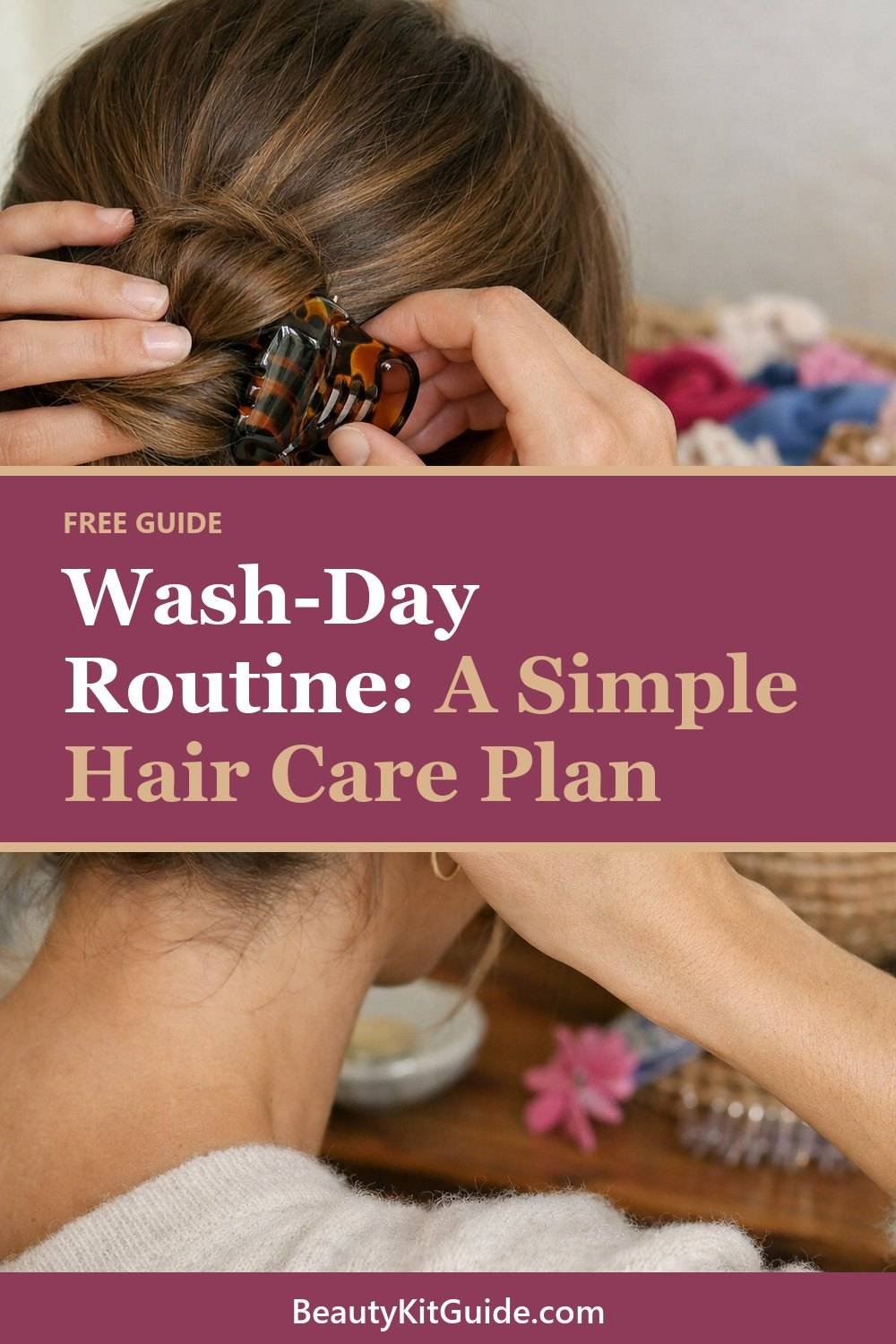
Keep a hair diary
This sounds a bit much, I know. It's natural to roll your eyes at this advice. But it takes about thirty seconds after each wash, and it's the thing that turned my routine from random into something I understood.
Each entry just needs:
- The date
- What you did (washed, conditioned, used heat, tried something new)
- How your hair felt that day and the next
After a few weeks, patterns start to show up. Maybe your hair looks best on day two. Maybe it gets dry after you use a certain tool more than twice in a row. Maybe the expensive mask you bought does nothing your regular conditioner doesn't. You won't know until you write it down, because memory is terrible at this stuff.
You can keep yours as a running note on your phone. No app needed.
What I'd skip (and what's overrated)
A few things that get hyped a lot didn't matter much for me. Your mileage may vary, but here's my honest take.
Complicated multi-step routines. Ten-step wash days look lovely online. In real life, most people can't keep them up. A short routine you actually do beats a long one you abandon by week three.
Buying a full matching product line. It's tempting, especially when they're displayed together. But you don't need everything from one brand for your routine to work. Start with what you have.
Expecting big changes fast. A routine helps you stay organized and notice what you like. It isn't a magic fix, and hair changes slowly anyway.
Be realistic
This guide is about organizing a routine. It makes no claims about hair growth or hair loss, and it won't fix a medical issue. If you're dealing with scalp pain, flaking that won't go away, sudden shedding or patches of hair loss, please see a doctor or a qualified professional. That's not something a chart or a diary can sort out.
Also, give yourself some grace. Some weeks you'll miss a wash day or forget the diary. That's normal. Just pick it back up.
Tools and products worth a look
You don't need much for a simple wash day, but a few well-known items can make the steps easier. Here are some real options to consider, with a note on what to check before you choose.
Wet Brush Original Detangler
This suits anyone who dreads knots, especially on longer or thicker hair. Check that the bristle firmness feels comfortable on your scalp, and still start at the ends and work up.
Tangle Teezer
A popular detangling brush that suits people who like a compact, handheld shape. Look at the different versions, since some are made with particular hair types in mind.
Denman Brush
A classic choice for people with curly or coily hair who detangle with conditioner in. Check the number of rows and how it feels in your hand before settling on one.
Microfiber Hair Towel from Aquis
Aquis makes hair towels that suit anyone who wants a gentler option than a rough bath towel. Check the size against your hair length, and remember to pat or squeeze rather than rub.
Olaplex No. 3 Hair Perfector
A well-known treatment for people who want to add one extra step once their basic routine feels automatic. Read the instructions on how often and how long to use it, and add it on its own so you can tell what it does.
Briogeo Don't Despair, Repair! Deep Conditioning Mask
This suits people who want to try a mask on wash day after the basics are settled. Check the ingredient list and the directions for timing, especially if your scalp is sensitive.
Notion
A free-to-start notes app that works well for a hair diary and weekly wash-day chart. Your phone's built-in notes app does the same job, so only switch if you want templates or tags.
Check current plans and prices on each brand's own site before you buy.
FAQ
How long should a wash day take?
It depends on your hair length, texture and how you style it. Mine takes about thirty minutes plus drying time. Start simple and you'll find your own pace.
Do I need special products to follow this routine?
No. You can use the shampoo and conditioner you already have. The routine is about order and consistency, not about buying anything new.
Should I shampoo twice?
Some people like a second shampoo if their scalp feels oily or they've used a lot of styling product. Others find once is plenty. Check your product's instructions and see how your scalp feels.
When should I see a professional?
If you notice unusual hair loss, an itchy or painful scalp, or anything that worries you, talk to a doctor or qualified professional. A routine is for organizing, not for diagnosing anything.
Quick summary
Pick a wash rhythm that fits your real life. Follow the same simple order each time: detangle, rinse, shampoo the scalp, condition the ends, rinse, dry gently, style. Plan your week on paper, follow your heat tool's instructions, change one product at a time, and jot down a few notes after each wash. Within a month or so, you'll know your hair a lot better than you do now.
If you'd like to start a routine for your skin alongside your hair, grab the free AM-PM Routine Chart for Skincare Beginners by joining the email list in the box on this page. Print it out, stick it near your mirror, and set up your first wash day this week.
Some links on this site may earn us a commission. Read our disclosure.