Korean Skincare Set Buyer's Guide: Cleanser, Moisturizer and More
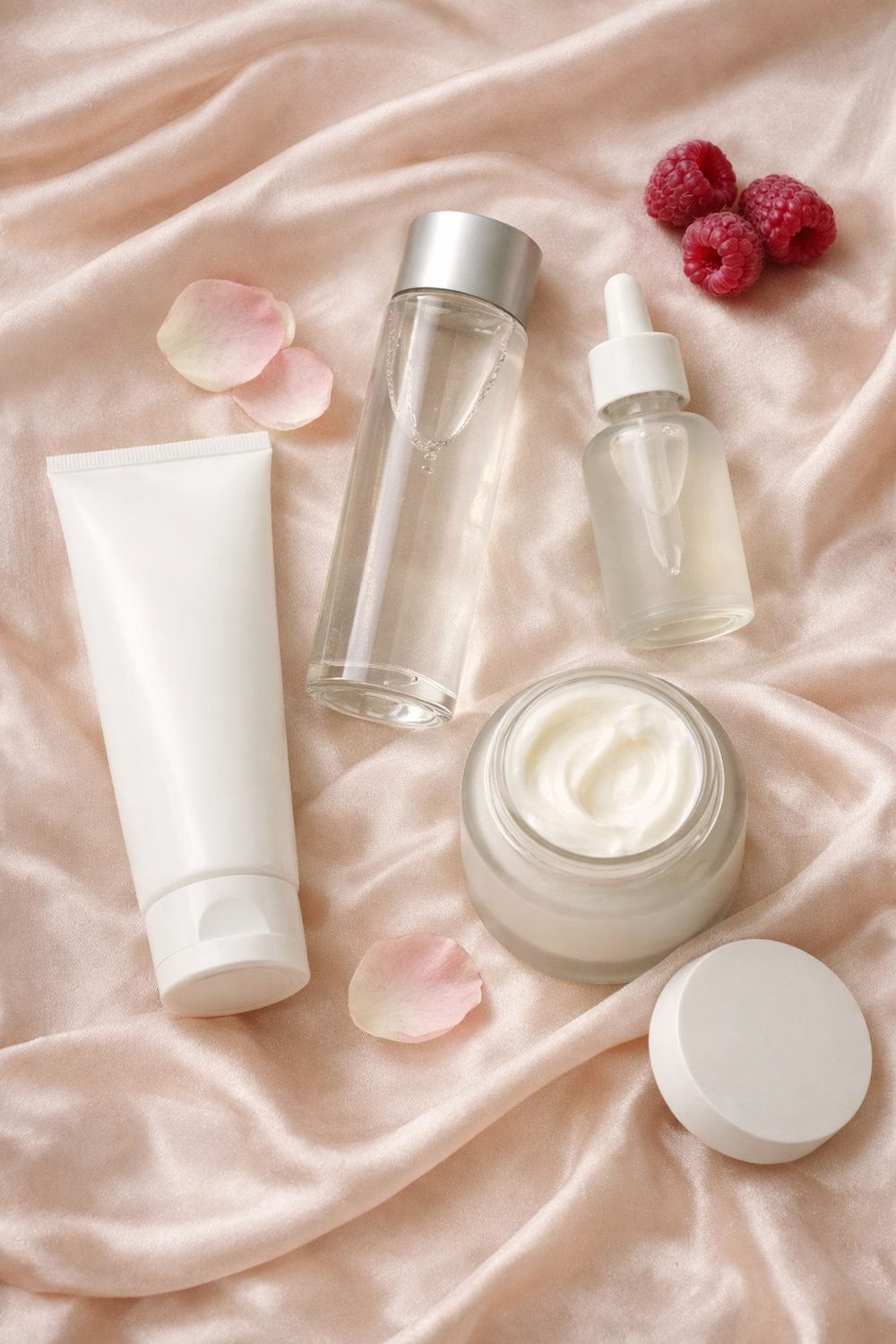
A Korean skincare set bundles several products, such as a cleanser, a moisturizer and a few extras, into one purchase. This guide explains what is inside, how to match a set to your skin type, and how to compare size and value before you buy.
A skincare set, including a korean skincare set, looks like an easy win. One box, a few matching bottles, often a nice price. Others had one product I loved and three I gave away to my sister.
Sets bundle several products together, so you have to look at what's actually inside before you decide. That sounds obvious. But when the packaging is pretty and the box says "complete routine," it's easy to skip that step. It's an easy mistake to make, and plenty of people make it more than once.
This skincare sets buyer guide walks you through how to judge a skincare set, product by product. We'll start with the cleanser and moisturizer, then cover the extras that sets love to throw in. This guide also covers what you can skip.
Short on time? Our top picks: CeraVe, Cetaphil, La Roche-Posay and Neutrogena. See all picks

Quick summary: how to choose a skincare set
- Figure out your skin type before you shop. It changes which set makes sense.
- A good set has a cleanser and a moisturizer you'd actually buy on their own.
- Extras like eye cream or mist are nice, but they shouldn't be the reason you buy.
- Check the size of each item. Mini sizes run out fast.
- Read the full ingredient list on the seller's page, not just the front of the box.
- Introduce new products slowly so you can tell what's working and what isn't.
- If you have a skin condition or a reaction, ask a dermatologist or pharmacist.
What's really inside a Korean skincare set
Most sets follow a pattern. You'll usually find a cleanser and a moisturizer at the core. Then there's something in the middle, like a toner or serum. Some sets add a sunscreen, an eye cream, a face mask, or a small tool like a headband or a cotton pad.
For a simple skincare set comparison, treat the set as a list of separate products. Pretend each one is sitting alone on a shelf. Would you pick it up? If the answer is yes for two or three of them, the set might be worth it. If you're only excited about one item, you might be better off buying that one by itself.
Core products vs filler
Think of the cleanser and moisturizer as the "core." You'll use them every day, usually twice. They're the products that matter most in a set.
Filler is anything you'll use once in a while, or never. A sheet mask, a tiny lip balm, a cotton headband. These aren't bad. They're just not the reason to spend money. Some brands pad sets with small extras to make the box feel full. Count what you'd really use.
The "routine" promise
Lots of sets are sold as a full morning and night routine. That can be handy if you're starting from zero. It takes the guessing out of which order to use things. But a routine only works if every step suits your skin. A set made for oily skin won't feel great on dry, flaky cheeks, no matter how nicely it's arranged.
Start with your skin type
Before you look at any set, spend a day noticing your skin. Wash your face with something gentle, wait an hour or so, and see how it feels. You can do this at a kitchen table with a mirror propped up in front of you. Not glamorous, but it worked.
A rough guide to skin types
- Oily: Shiny all over by midday, especially on the forehead and nose.
- Dry: Feels tight after washing, maybe flaky around the nose or cheeks.
- Combination: Oily in the middle, normal or dry on the cheeks.
- Sensitive: Gets red, itchy or stings easily with new products.
- Normal: Not too oily, not too dry. Lucky you.
Most sets say which skin type they're made for. Some say "all skin types," which usually means the formulas are fairly mild. That's fine for many people, but if your skin is very oily or very dry, a targeted set may suit you better.
If your skin is reacting a lot, breaking out in a way that worries you, or you have a condition like eczema or rosacea, a set from a store isn't the place to start. Talk to a dermatologist first.
The cleanser: the product you'll use most
You wash your face once or twice a day, so the cleanser gets the most use of anything in the box. It's also the item that most often goes wrong for me. A cleanser that strips your skin can make everything else feel worse.
Types of cleansers in a kit skincare set
Gel cleansers are clear or slightly cloudy and often foam a little. People with oily or combination skin tend to like them.
Cream or milk cleansers feel soft and don't foam much. They're usually kinder to dry or sensitive skin.
Foaming cleansers make a lot of bubbles. Some people love that clean feeling. Many of them can leave cheeks feeling tight, so be careful with these.
Oil or balm cleansers (the best oil cleanser is the one your skin tolerates) melt off makeup and sunscreen. They're often the first step in a "double cleanse." Nice, but not something every beginner needs.
How to find the best cleanser for you
After washing, your face should feel clean but comfortable. If it feels squeaky, tight or itchy, that cleanser may be too harsh for you. A little tightness for a minute is normal for some people. Tightness that lasts until you put on moisturizer is a sign to switch.
Also look at the size. Cleansers in sets are sometimes tiny, and you'll go through one fast. If the cleanser is a mini and the moisturizer is full size, you'll be shopping for a new cleanser in a few weeks.
The moisturizer: where texture matters
The moisturizer is the other half of the core. It's the one I judge most by feel, because a great formula that I hate putting on won't get used.
Lotion, gel or cream?
Here's how I think about the common textures:
- Gel moisturizers feel light and watery. They sink in quickly. Good for oily skin or hot weather.
- Lotions sit in the middle. Light enough for daytime, enough moisture for most people.
- Creams are thicker and richer. Great for dry skin or winter nights. On oily skin they can feel heavy.
Some sets include two moisturizers, one for day and one for night. That can be a nice touch, especially if the night cream is richer. But plenty of people use one moisturizer for both and are perfectly happy.
The jar vs pump question
This is a small thing, but I care about it. Pumps and tubes keep fingers out of the product, which feels cleaner. Jars are easy to scoop, and some thick creams only come in jars. Neither is wrong. If you're someone who forgets to close lids (I am), a pump might just be easier.
The "and more": extras in skincare sets
This is where sets get creative, and where you should slow down. Some extras are genuinely useful. Others are there to make the box look bigger.
Toner
Toners used to be harsh, alcohol-heavy liquids. Many modern ones are gentle and hydrating instead. Some people love the extra step. Honestly, I skipped toner for years and didn't miss it. If a set includes one, it's a bonus, not a must.
Serum
Serums are thin liquids made to target a specific concern, like dullness or dryness. They can be the most interesting product in a set. They can also be the one most likely to irritate, depending on the ingredients. Check what the serum is for, and whether that's something you want. A brightening serum isn't much use if your main problem is dryness.
Sunscreen
If a set includes a daytime sunscreen, that's a real plus in my eyes. It's the step a lot of beginners skip. Look at the SPF number and whether it says "broad spectrum" on the seller's page. Small tubes won't last long if you use the right amount, so plan to buy more.
Eye cream
Eye cream is a bit overrated for most beginners. Many people do fine using a gentle moisturizer, such as one from Cetaphil, around the eyes. If you love the idea, enjoy it. Just don't pay extra for a set mainly because of the eye cream.
Masks, mists and tools
Sheet masks are fun for a Sunday night. Face mists feel nice on a hot day. Headbands and pads are handy. None of them should decide your purchase. Treat them like the free sticker that comes with an order.
If you're putting a routine together for the first time, our Free AM-PM Routine Chart for Skincare Beginners can help you see where each product goes, and you can grab it by joining the email list.

Size, value and doing the math
Sets are often sold as a better deal than buying each item separately. Sometimes that's true. Sometimes the "value" is based on full-size prices while the set is full of minis.
Full size, travel size and deluxe samples
Look at the amount listed for each product on the seller's page. It's usually in milliliters or ounces. Then compare it to the regular size of the same product, if the brand sells it alone. You'll quickly see whether you're getting a big bottle or a little taste.
Travel sizes aren't bad. They're perfect for trying a brand without committing. They're also great for trips and gym bags. Just know what you're buying.
A simple way to compare value
Here's what I do, roughly:
- Write down each product in the set and its size.
- Cross out anything you know you won't use.
- Look up what the remaining products would cost on their own, on the seller's page.
- Compare that total to the set price.
If the set only beats buying separately because of items you crossed out, it's not really a deal for you. That step has saved me from a few impulse buys during holiday sales.
Reading the label without a chemistry degree
You don't need to understand every ingredient. But a few habits help a lot.
Find the full ingredient list
The front of a box tells you the highlights. The full list is usually on the back or on the seller's product page. Ingredients are generally listed from most to least, so the first few make up most of the product.
Watch for things you already know bother you
If fragrance makes your skin itch, look for "fragrance" or "parfum" in the list. If you've reacted to a specific ingredient before, check every product in the set for it, not just one. It's easy to read the cleanser carefully and then forget the moisturizer.
Be careful with strong actives together
Some sets include several products with exfoliating acids or other strong ingredients. Using them all at once on day one can be a lot for your skin. Read the directions on each product and the seller's page. If you're not sure how to combine them, a pharmacist or dermatologist can help.
Skincare set comparison: two sets side by side
Let me show you how this looks in practice. Imagine two made-up sets sitting next to each other.
Set A has a full-size gel cleanser, a full-size lotion moisturizer, and a small sunscreen. That's it. Plain box.
Set B has a mini foaming cleanser, a mini cream, a toner, a serum, an eye cream, two sheet masks and a headband. Gorgeous box with a ribbon.
Set B looks like more. But think about daily use. Set A gives you two products you'll use every day for a good while, plus sun protection. Set B's daily products are tiny, and much of the rest is optional. If you have oily skin, Set A's gel and lotion may also suit you better than Set B's foam and cream.
On the other hand, Set B could be great as a gift, much like a mens skincare gift set, for someone who loves trying things, or for a trip. There's no single right answer. It depends on what you'll actually use.
My skincare set checklist before buying
- Is the set made for my skin type?
- Would I buy the cleanser and moisturizer on their own?
- How long will the daily products last?
- Do I already own something that does the same job?
- Can I return it if my skin reacts? (Check the seller's return policy.)
Trying a new set the smart way
When the box arrives, it's tempting to use everything that same night. It's an understandable temptation. Doing so can leave you with a red patch on your chin and no idea which product caused it.
Patch test first
Many brands suggest a patch test. You put a little of the product on a small area, like behind the ear or on the inner arm, and wait to see if anything happens. Follow the instructions on the product or seller's page. If you get a reaction, stop using it.
Add one product at a time
Start with the cleanser and moisturizer. Use them for several days. If your skin is happy, add the next product. This way, if something goes wrong, you know what it was.
It's slower. It's also way less stressful than guessing.
Common mistakes
These are the ones I see most, and a few I've made myself.
- Buying for the box, not the bottles. Pretty packaging is fun, but you can't put it on your face.
- Ignoring the skin type label. A set for dry skin can feel greasy on oily skin, and the other way around.
- Not checking sizes. A "five-piece set" of tiny minis may last a couple of weeks.
- Using every product on day one. If you react, you won't know why.
- Doubling up on strong actives. Two exfoliating products plus a serum can be too much at once.
- Keeping a product that stings. Some people push through. Please don't. Stop and ask a professional if it continues.
- Forgetting what you already own. I once bought a set and realized I had the same cleanser, unopened, under my sink.
- Trusting "value" claims without math. Do the quick comparison so you know what you're really saving.
Skincare brands and sets worth a look
These are well-known brands that sell cleansers, moisturizers and sets. Treat them as starting points for your own product-by-product check, not as a final answer.
CeraVe
A drugstore brand that suits people who want simple, no-fuss cleansers and moisturizers. Check which formula matches your skin type, since the range covers several.
Cetaphil
A good fit for people with dry or sensitive-feeling skin who want a gentle routine. Read the ingredient list for fragrance if that bothers you.
La Roche-Posay
Often found at pharmacies and a reasonable pick if you like the idea of buying where a pharmacist can answer questions. Check that each product you choose is meant for your skin type.
Neutrogena
Suits beginners who want an easy-to-find cleanser, moisturizer or sunscreen. Look closely at the label, as formulas differ a lot from one line to the next.
COSRX
A Korean skincare brand that suits people curious about a K-beauty style routine. Check each product's ingredients and directions, especially if you already use strong actives.
Beauty of Joseon
Another Korean brand, good for anyone who wants to try K-beauty sunscreens or moisturizers one at a time. Confirm the product type and skin type on the seller's page before you buy.
Innisfree
A Korean brand that suits shoppers who like trying a range of cleansers, masks and gift-style sets. Check the size of each item, since sets can include minis.
The Ordinary
Best for people who want to build a routine piece by piece instead of buying a boxed set. Check what each product is for and how it should be combined with others.
Check current plans and prices on each brand's own site before you decide.
FAQ
Is a skincare set better than buying products separately?
It can be, if you'll use most of what's inside. If you'd only use one or two items, buying those alone is often smarter. Do a quick size and price check on the seller's page before deciding.
Can I mix products from different sets or brands?
Usually, yes. Plenty of people use a cleanser from one brand, say La Roche-Posay, and a moisturizer from another. Just introduce new things one at a time and be careful about stacking strong ingredients.
How long does a skincare set last?
It depends on the sizes and how often you use each product. Full-size cleansers and moisturizers can last a good while, but minis run out much faster. The amount listed on each item is your best clue.
What if my skin reacts to one product in the set?
Stop using that product. If the reaction is strong or doesn't go away, talk to a pharmacist or dermatologist. You can also check the seller's return policy, since some allow returns on opened items.
If you're ready to build your routine, the easiest next step is to grab the Free AM-PM Routine Chart for Skincare Beginners by joining the email list. Print it, stick it near your mirror, and use it as you compare sets. Keep this guide open too, so you can check each product on its own before you buy.
1. Write down what you need
Cleanser, moisturizer, sunscreen or something else.
2. List each piece in the set
Count the items and sizes.
3. Read the ingredient lists
Look for anything you avoid.
4. Work out the cost per item
A set is only good value if you use every piece.
5. Check the return policy
Opened items may not be returnable.
6. Read the seller's page
Confirm contents and terms.
Ready to choose your skincare set?
This is an affiliate link. Prices and terms change, so check the seller's page. General information only, not medical advice.
Want a printable to keep track while you work? Get our free am-pm routine chart for skincare beginners.